
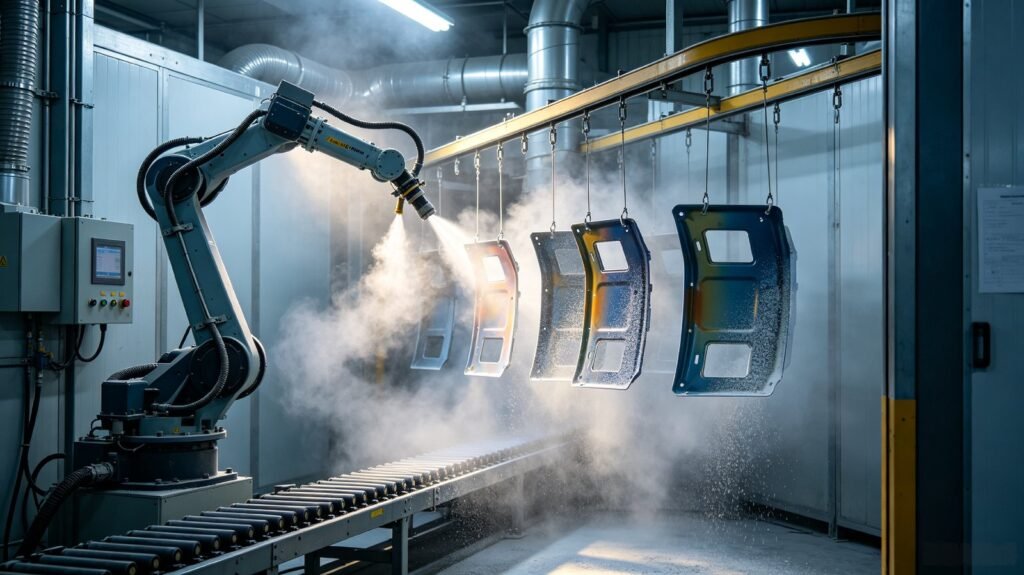
Powder Coating vs Liquid Paint: 6 Reasons Manufacturers Are Switching
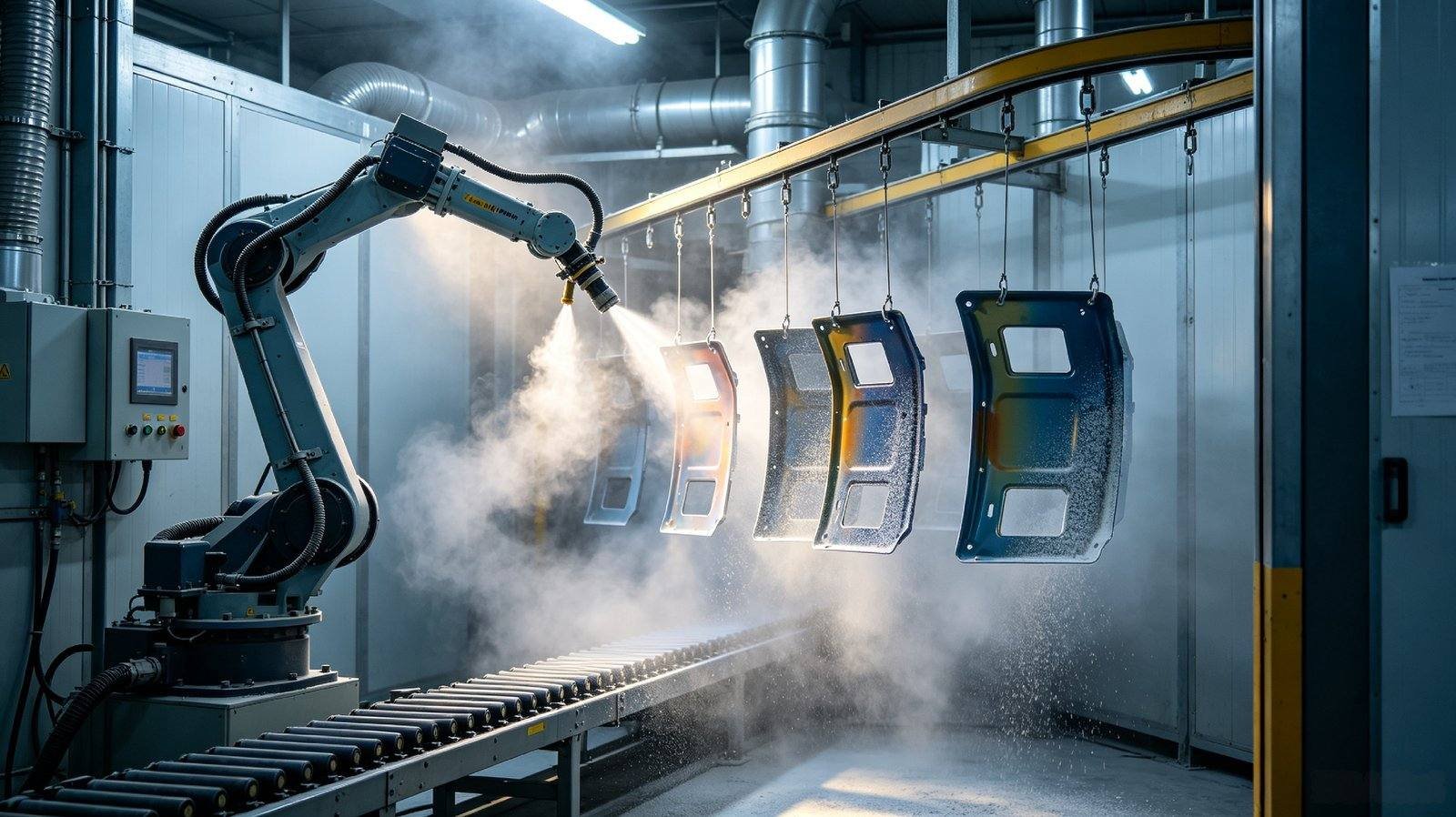
Manufacturers who switch from liquid paint to powder coating usually do it for the same reasons: one-coat efficiency, better durability and no solvent emissions. But powder coating is not always the right answer, and a good supplier will tell you so. Here is an honest comparison to help you decide which process fits your parts, volumes and quality targets.
Buyer Decision Snapshot
Choose powder coating for repeat metal parts needing one durable coat, high material utilization and low VOC. Choose liquid paint for heat-sensitive assemblies, on-site work or very large parts that cannot enter an oven.
Key Takeaways
- Powder gives one coat of 60-120 microns, equal to two or more liquid coats, with no flash-off time.
- Overspray is reclaimed, which pushes material utilization above 90% and cuts solvent waste.
- Powder contains no solvents, so VOC emissions are near zero and there is no flammable liquid on site.
- Liquid paint still wins on heat-sensitive substrates, spot repair and parts too large for a curing oven.
- Compare cure oven capacity, part geometry and line throughput.
- Check corrosion, UV, color and gloss requirements over the full life.
- Include reclaim, overspray, VOC and rework in the total cost.
- Ask for coated test panels before switching a current liquid line.
How the Two Processes Differ
Liquid paint is applied wet and dries or cures by solvent evaporation. Powder coating is applied as dry particles that are charged, attracted to the grounded part, and then melted and cured in an oven. There is no liquid to dry – the powder goes from solid particle to solid film in one step.
Efficiency and Throughput
- One coat of powder typically gives 60-120 microns, equal to two or more coats of liquid
- No flash-off or solvent drying time before curing
- Overspray is collected and reused, raising material utilization to 90%+
- Lines can be automated with robots and conveyor ovens for high throughput
Environmental and Safety Advantages
Powder coating contains no solvents, so VOC emissions are near zero and there is no flammable liquid stored on the line. Overspray is recovered rather than released. This simplifies environmental compliance and makes the workshop safer – an important factor for factories under tightening regulations.
Durability and Film Build
Because powder cures into a continuous film at higher thickness, it generally outperforms liquid on impact, abrasion, chipping and corrosion resistance. That is why powder is the default for products that face rough handling, weather or chemicals – from bicycle frames to structural steel.
Cost Considerations
Powder usually wins on material utilization and labor because of the one-coat process and reclaimed overspray. Liquid paint can still be cheaper for very small batches, complex multi-color work, or when an existing liquid line is already fully depreciated. The crossover point depends on part size, color changes and line speed.
Where Liquid Paint Still Wins
- High-gloss automotive clear coats and metallic finishes that need multiple wet layers
- Spot repair and touch-up on finished parts
- Heat-sensitive substrates such as wood, plastic and assemblies with electronics
- Very large parts that cannot fit in a curing oven
The Verdict
For most metal products produced in volume – furniture, enclosures, profiles, frames, brackets – powder coating delivers better durability, lower waste and simpler compliance. If your parts are heat-safe and your volumes justify an oven, powder is very likely the lower total-cost option.
Frequently Asked Questions
Which is better, powder coating or liquid paint?
Powder coating is usually better for metal parts produced in repeat volumes because it gives a durable one-coat finish, high material utilization and low VOC. Liquid paint is better for heat-sensitive assemblies, on-site work or parts too large for an oven.
Is powder coating more durable than liquid paint?
On correctly pretreated metal, powder coating is generally tougher and more abrasion-resistant than many single-coat liquid systems. Real durability still depends on resin selection, pretreatment, film thickness and exposure.
Can all parts be powder coated?
No. Heat-sensitive plastics, wood, assembled electronics and oversized structures may not tolerate the curing oven. Liquid paint, low-temperature powder or a redesign may be required.
Which process has lower environmental impact?
Powder coating usually has lower VOC because it uses dry powder instead of solvent. The full comparison should include oven energy, reclaim, overspray disposal, rework and local regulations.
Need More Information?
Our engineers can help you choose the right powder coating system, color and finish for your project.