
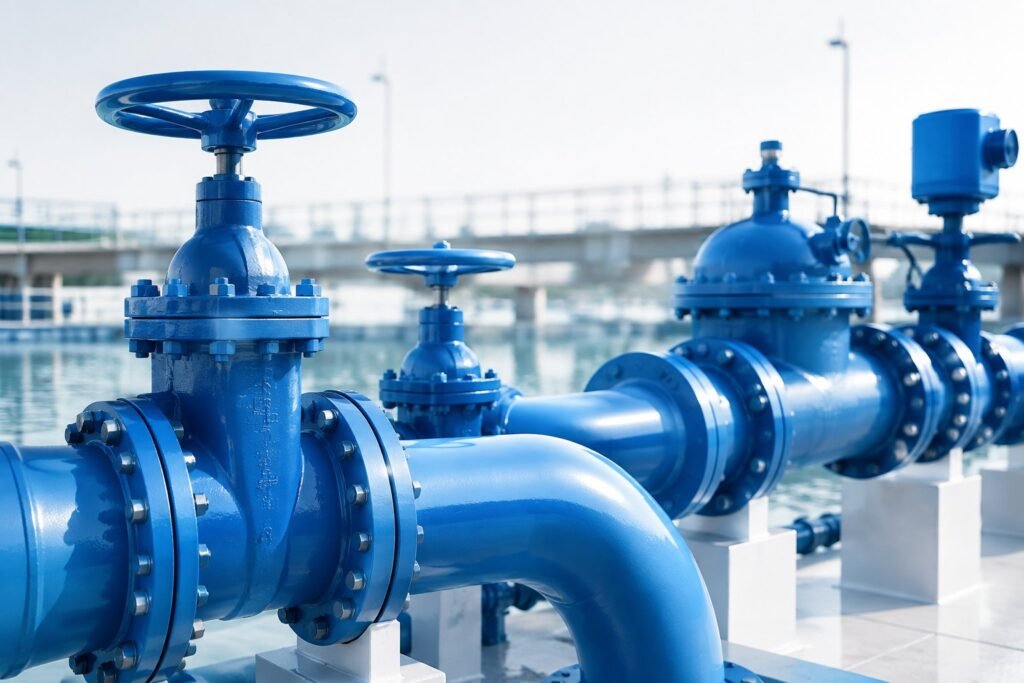
Powder Coating for Valves, Pumps and Water Infrastructure
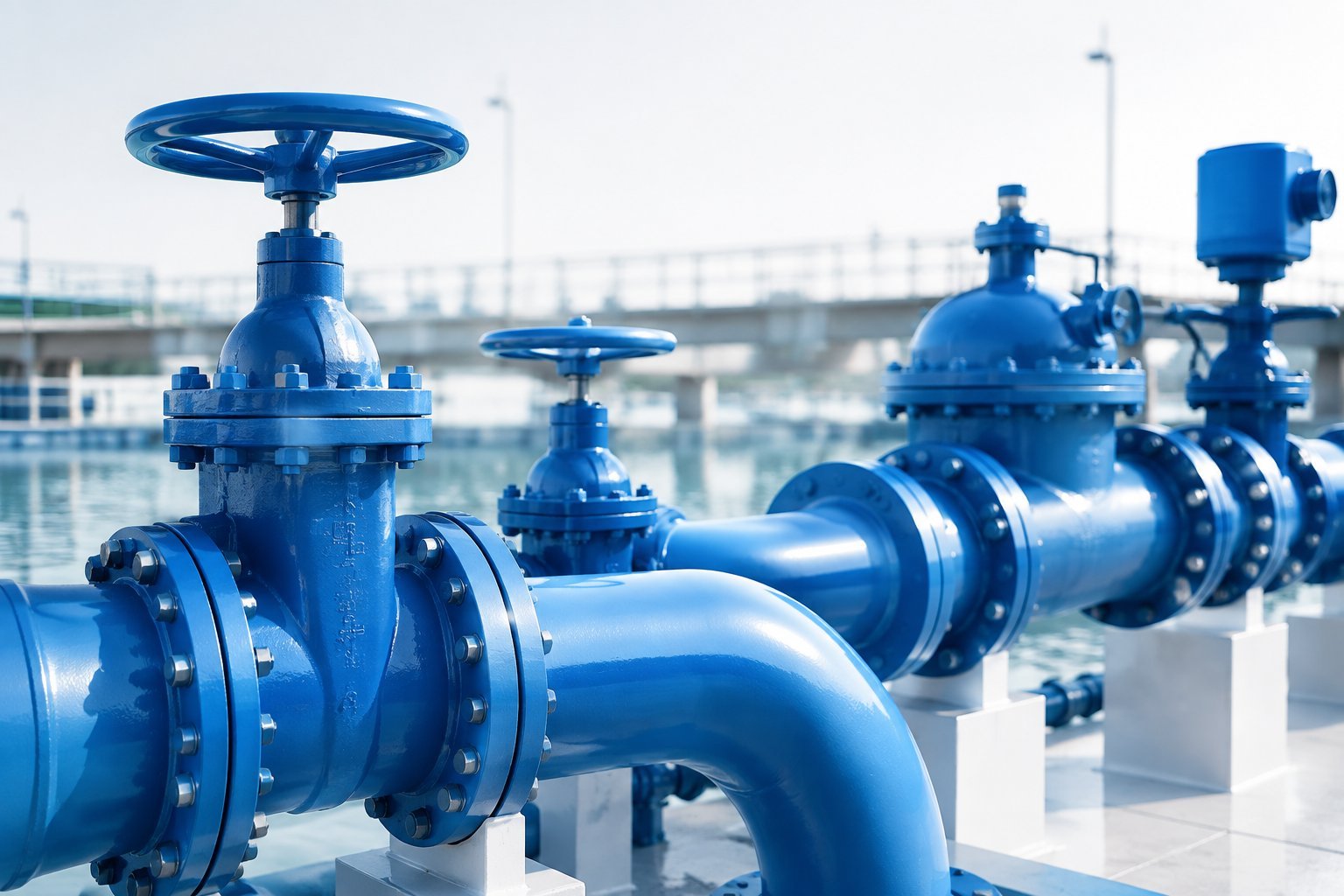
Valves, pumps, pipe fittings and other water infrastructure components operate in some of the harshest conditions a coating can face: constant moisture, aggressive chemicals, abrasive media and, in drinking water systems, strict hygiene requirements. Getting the coating right is not optional – it is what keeps the network running for decades.
Key Takeaways
- On water infrastructure the coating is a safety component, not decoration.
- Fusion-bonded epoxy suits buried steel and aggressive media; epoxy and hybrids suit valve bodies and pump housings.
- Coatings contacting potable water need approvals such as WRAS, ACS or NSF 61 for the exact product and color.
- Cast surfaces need thorough preparation because scale and mould release block adhesion.
Why Valves Need Serious Coatings
A valve body is exposed to internal media, external environment and mechanical handling. Without a robust coating, corrosion pits the casting, seizes moving parts and eventually leaks. The coating on water infrastructure is a safety component, not decoration.
The Systems That Work
- Fusion-bonded epoxy (FBE) for buried steel, pipe interiors and aggressive media
- Epoxy and epoxy-polyester hybrids for valve bodies and pump housings in water service
- Polyester or polyurethane topcoats where UV and color stability matter above ground
- Zinc-rich epoxy primers under topcoats for the highest corrosion resistance
Drinking Water Approvals
When the coating will contact potable water, national approvals apply: WRAS and the water regulations advisory scheme in the UK, ACS in France, NSF 61 in the US. These are not marketing badges – they involve migration testing of the cured coating. Always ask for the certificate and check it covers your specific product and color.
Surface Preparation and Film Build
Cast valve bodies arrive with scale, mold release and rough surfaces. Blasting to the specified cleanliness and profile is the foundation; a thin film on a rough casting will not survive. Specify a minimum dry film thickness across the part, not an average, because edges and recesses lose the most.
Testing and Documentation
- Salt spray or neutral salt fog hours according to your service environment
- Adhesion (cross-cut or pull-off) after curing and after immersion testing
- Impact resistance for handling and installation
- COA for every batch plus the relevant water-contact certificate
Frequently Asked Questions
Which powder coating is used for water valves and pumps?
Fusion-bonded epoxy for buried steel and aggressive media, and epoxy or epoxy-polyester hybrids for valve bodies and pump housings in water service, with polyester or polyurethane topcoats where UV stability matters.
Does powder coating for drinking water need certification?
Yes. Coatings in potable water service need approvals such as WRAS in the UK, ACS in France or NSF 61 in the US, issued for the specific product and color.
Why is surface preparation critical on cast valve bodies?
Castings arrive with scale, mould release and a rough surface. Without proper cleaning and profiling, the coating bonds to contamination rather than metal and fails under service pressure.
Need More Information?
Our engineers can help you choose the right powder coating system, color and finish for your project.