
Specifying Powder Coating for Aluminum Extrusions
Aluminum extrusions look straightforward to coat – until a facade starts chalking after three years or a profile arrives with thin edges. Specifying powder coating for architectural aluminum means choosing a complete system: the right pretreatment, the right resin family, the right film build, and the right way to measure quality along a long profile. This guide covers each decision.
Key Takeaways
- Aluminum needs its own pretreatment: chrome-free conversion coating, not the phosphate used on steel.
- Exterior profiles typically specify 60-100 microns dry film; interior profiles 50-80 microns.
- State gloss as a range, for example 30-40 gloss units at 60 degrees, rather than a single number.
- On a 6-metre profile, check thickness at both ends and the middle, and keep a coated section as reference.
Why Aluminum Needs Different Pretreatment Than Steel
Steel relies on blasting and phosphate conversion layers for adhesion, while aluminum brings its own natural oxide layer and a different corrosion chemistry. For architectural extrusions the modern standard is a chrome-free conversion coating that prepares the surface without hexavalent chromium chemistry. The pretreatment step is where most long-term adhesion failures begin: a profile that looked perfect at the factory can delaminate on a facade if the conversion layer was skipped or too thin.
Choose the Resin System by Exposure, Not by Price
Interior profiles are fine with standard polyester. For exterior facades, window frames and curtain wall systems, specify a super-durable polyester or a PVDF-based system depending on the project: super-durable polyester gives excellent color and gloss retention at a practical cost, while PVDF is chosen for landmark projects where the spec demands the highest weather resistance. Ask for the manufacturer data on chalking, color retention and gloss retention over the design life of the building.
Film Thickness and Gloss for Architectural Quality
- Exterior architectural profiles: typically 60-100 microns (2.4-3.9 mils) dry film
- Interior profiles: 50-80 microns is usually sufficient
- Gloss: state a target range, e.g. 30-40 gloss units, not a single number
- Edge coverage: measure at corners and cut ends, not only on flat faces
Color and Gloss Consistency Along a Long Profile
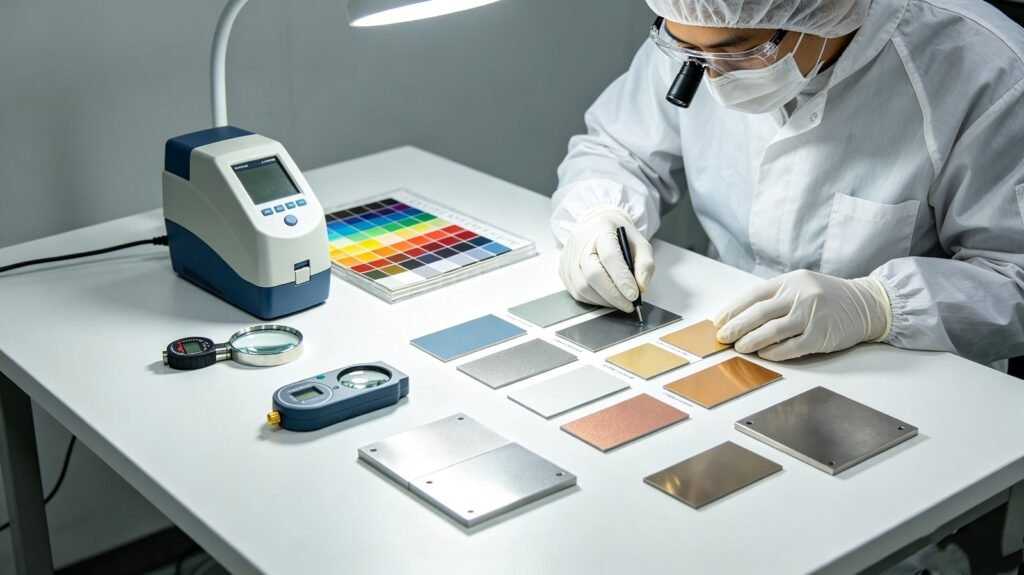
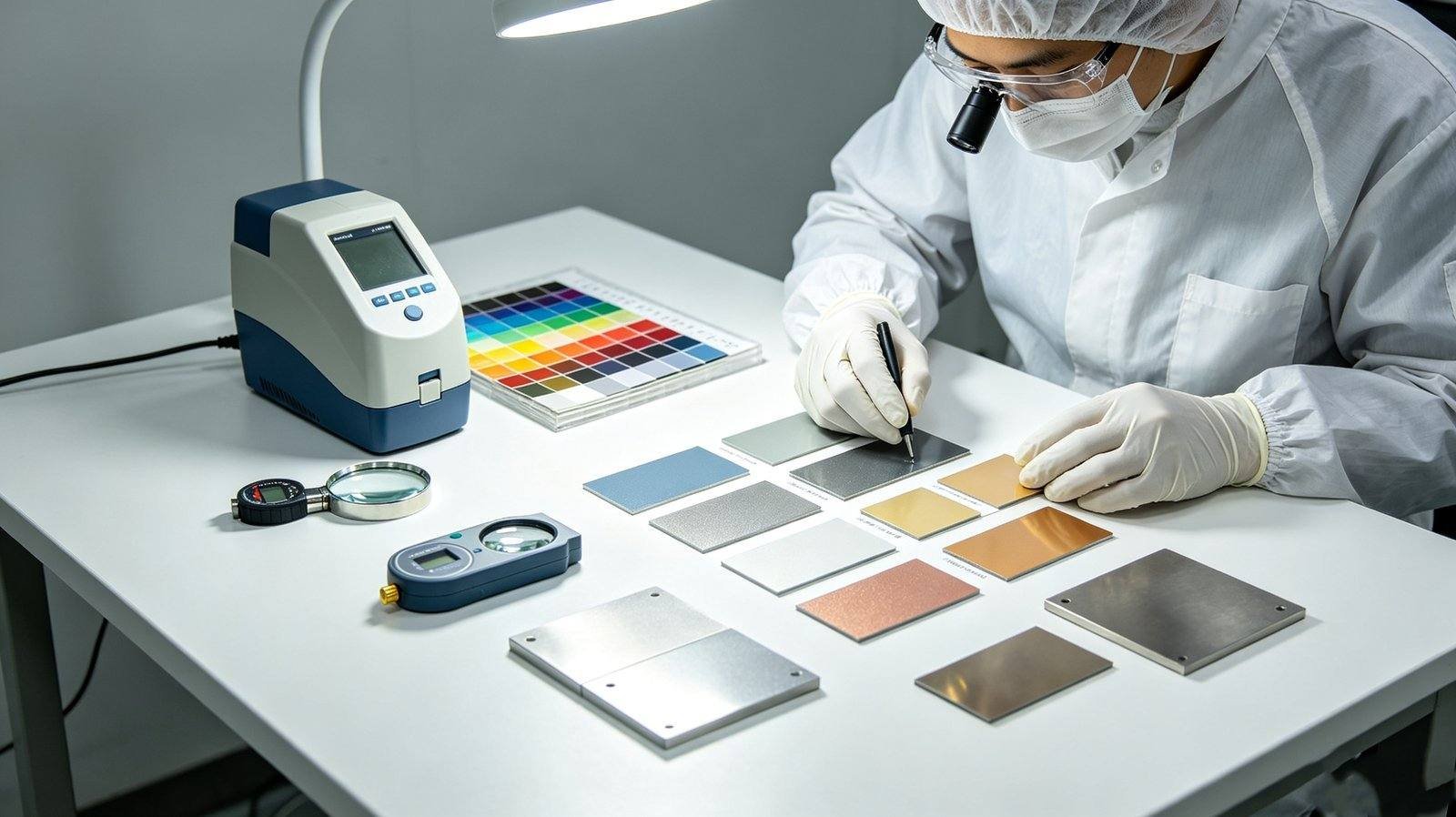
A 6-meter profile shows color variation more brutally than a small panel. Metallic and mica finishes are especially sensitive to spray distance, voltage and film thickness along the length. Specify the acceptable delta-E against the approved master, require measurement at multiple points along the profile, and keep the approved sample and production check panels together so the coating supplier and the coater are judging against the same reference.
Handling, Masking and Racking Marks
Aluminum profiles are soft enough that handling damage shows immediately under a gloss coating. Decide in advance where racking marks are acceptable, whether masking is required for mating surfaces and threaded holes, and how profiles will be packed for transport. These small decisions, written into the spec, prevent the most common disputes on architectural orders – marks, scratches and coated surfaces that should have stayed bare.
QA on Long Profiles: Measuring Along the Length
- Measure film thickness at the two ends and the middle of each sampled profile
- Check adhesion with a cross-cut test at a cut end and on a flat face
- Verify color against the approved master under standard light
- Keep one coated profile section from each batch as a retained reference
Specify the System, and the Supplier Will Follow
Send us the profile cross-section, the design life and exposure class of the project, and your approved color sample. We will confirm the pretreatment, resin system, film thickness and QA plan, and provide a technical data sheet your architect or quality team can sign off before production starts.
Frequently Asked Questions
What pretreatment do aluminum extrusions need before powder coating?
A chrome-free conversion coating that prepares the natural oxide layer for adhesion, applied after cleaning and rinsing. It replaces the iron or zinc phosphate used on steel.
What film thickness should architectural aluminium profiles have?
Exterior architectural profiles are usually specified at 60-100 microns dry film, measured on flats and at edges or cut ends where coverage is thinnest.
Should powder coating for aluminium be TGIC-free?
In Europe, TGIC-free super-durable polyester is the default because it avoids the H351 hazard classification while matching weathering performance.
Need More Information?
Our engineers can help you choose the right powder coating system, color and finish for your project.