
Gloss Levels Explained: Matte to Mirror
Gloss is the first thing people notice about a coated product and the last thing most specifications define carefully. Technically it is a measurement of reflected light, usually taken at a 60-degree angle; practically it is the difference between a premium matte frame and a mirror-finish appliance. Understanding what drives gloss – and what changes it – keeps your product looking exactly as designed, batch after batch.
Key Takeaways
- Gloss is measured in gloss units at 60 degrees as standard, with 20 or 85 degrees for extreme finishes.
- Typical bands: matte 10-30 GU, satin 30-50 GU, semi-gloss 50-70 GU, high-gloss above 80 GU.
- Texture, cure, film thickness and substrate all change the reading, so gloss must be specified as a range with the angle.
- Matte hides marks and orange peel; high-gloss gives the deepest color but shows every defect.
How Gloss Is Measured
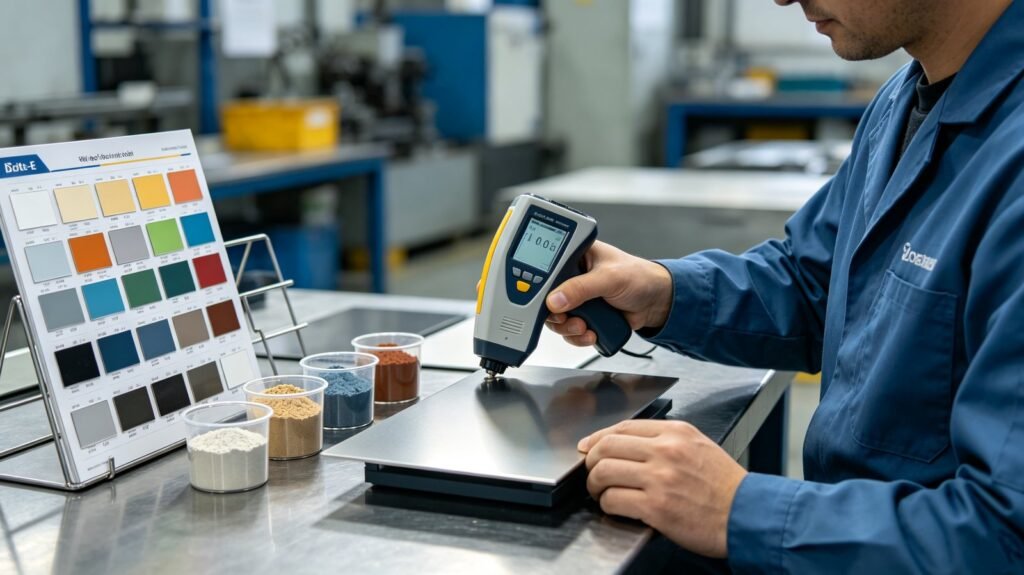
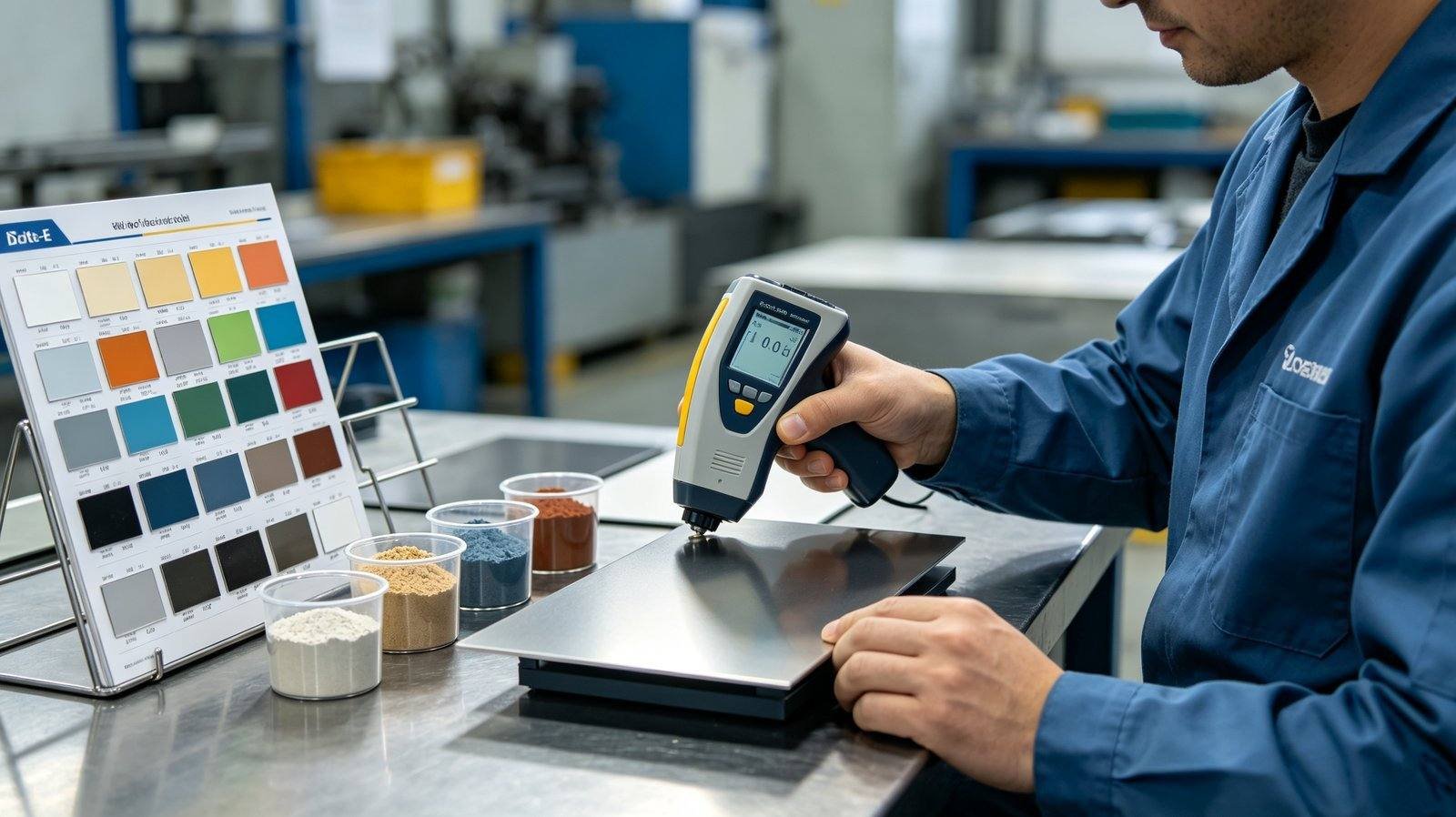
A glossmeter shines light at the surface and measures how much is reflected at specific angles – 20, 60 and 85 degrees. The 60-degree geometry is the standard reading; 20 degrees is used for very high-gloss finishes where 60-degree readings saturate, and 85 degrees for very matte finishes where contrast is low. Results are reported in gloss units (GU), and the measurement angle must be stated with the number.
What the Typical Levels Look Like
- Matte: roughly 10-30 GU – soft, low-reflection, hides surface imperfections
- Satin: roughly 30-50 GU – the most common industrial compromise
- Semi-gloss: roughly 50-70 GU – more reflectivity, still forgiving on marks
- High-gloss: above 80 GU – deep, saturated color, but every scratch and defect shows
What Changes Gloss During Production
- Texture: textured powders scatter light, so a textured finish reads lower in gloss than its smooth twin
- Cure: under-cure can leave the film looking dull; over-bake can lower gloss and yellow light colors
- Film thickness: thin film can show substrate roughness that lowers the perceived gloss
- Substrate: rough blast profiles and cast surfaces scatter light and reduce gloss
Matte: The Design Choice With a Trade-Off
Matte finishes hide fingerprints, minor scratches and orange peel, which is why they dominate architectural and consumer products. The trade-off is hiding power: matte surfaces scatter light and can make a color look lighter and flatter, and they are less forgiving of color difference between batches because there is no gloss to distract the eye. Matte also needs careful cure control – uneven temperature shows up as patchy sheen.
High-Gloss: Beautiful and Brutally Honest
High-gloss gives the deepest, most saturated color and the premium appliance and automotive look. It also shows every flaw: dust embedded in the film, orange peel, thin edges, even hand marks. High-gloss production demands clean booths, tight film control and flawless pretreatment. If the product will be handled roughly or inspected closely, question whether gloss above 80 GU is worth the reject rate.
How to Specify Gloss That Stays Consistent
- State a target range in GU at 60 degrees – for example 30-40 GU – not a vague word like matte
- State the measurement angle and standard (typically ISO 2813 or ASTM D523)
- Approve gloss on a physical panel, because photos cannot show reflectivity
- Require gloss readings on production samples, not just color readings
- Keep the approved gloss panel as the master for incoming inspection
Get the Gloss Right the First Time
Send us the target gloss range and a physical reference if you have one. We will select the formulation – smooth or textured, standard or custom gloss – spray a panel at the target level, and record the 60-degree reading on the certificate with every production batch.
Frequently Asked Questions
How is powder coating gloss measured?
With a glossmeter, normally at a 60-degree angle, and reported in gloss units against a standard such as ISO 2813 or ASTM D523. High-gloss finishes are read at 20 degrees and very matte finishes at 85 degrees.
What gloss level should I specify for architectural parts?
A range rather than a word: for example 30-40 GU at 60 degrees for a satin finish. Approve it on a physical panel, because photos cannot show reflectivity.
Why did the gloss change between batches?
Texture, cure level, film thickness and substrate roughness all shift the reading. Under-cure dulls the film and over-bake lowers gloss while yellowing light colors.
Need More Information?
Our engineers can help you choose the right powder coating system, color and finish for your project.