
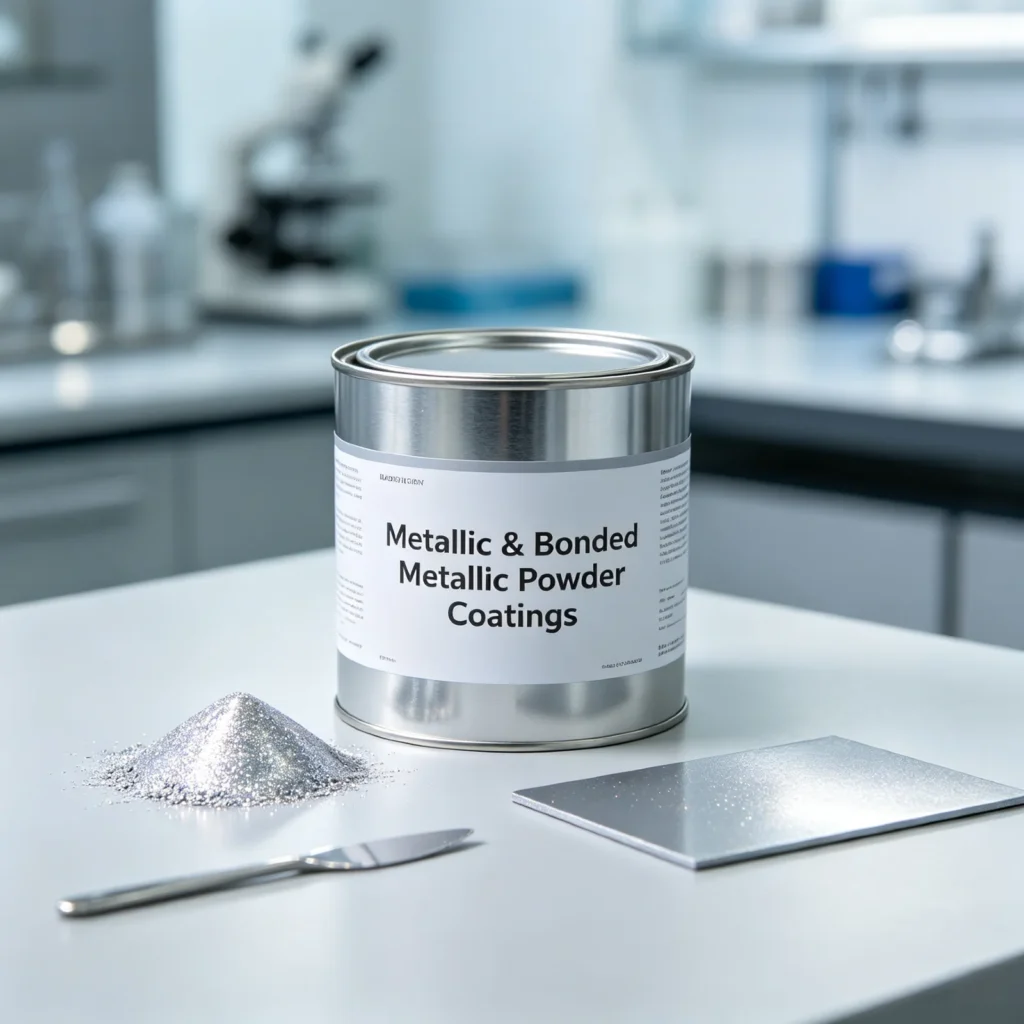
Metallic Powder Coatings: Beauty vs Performance Trade-offs
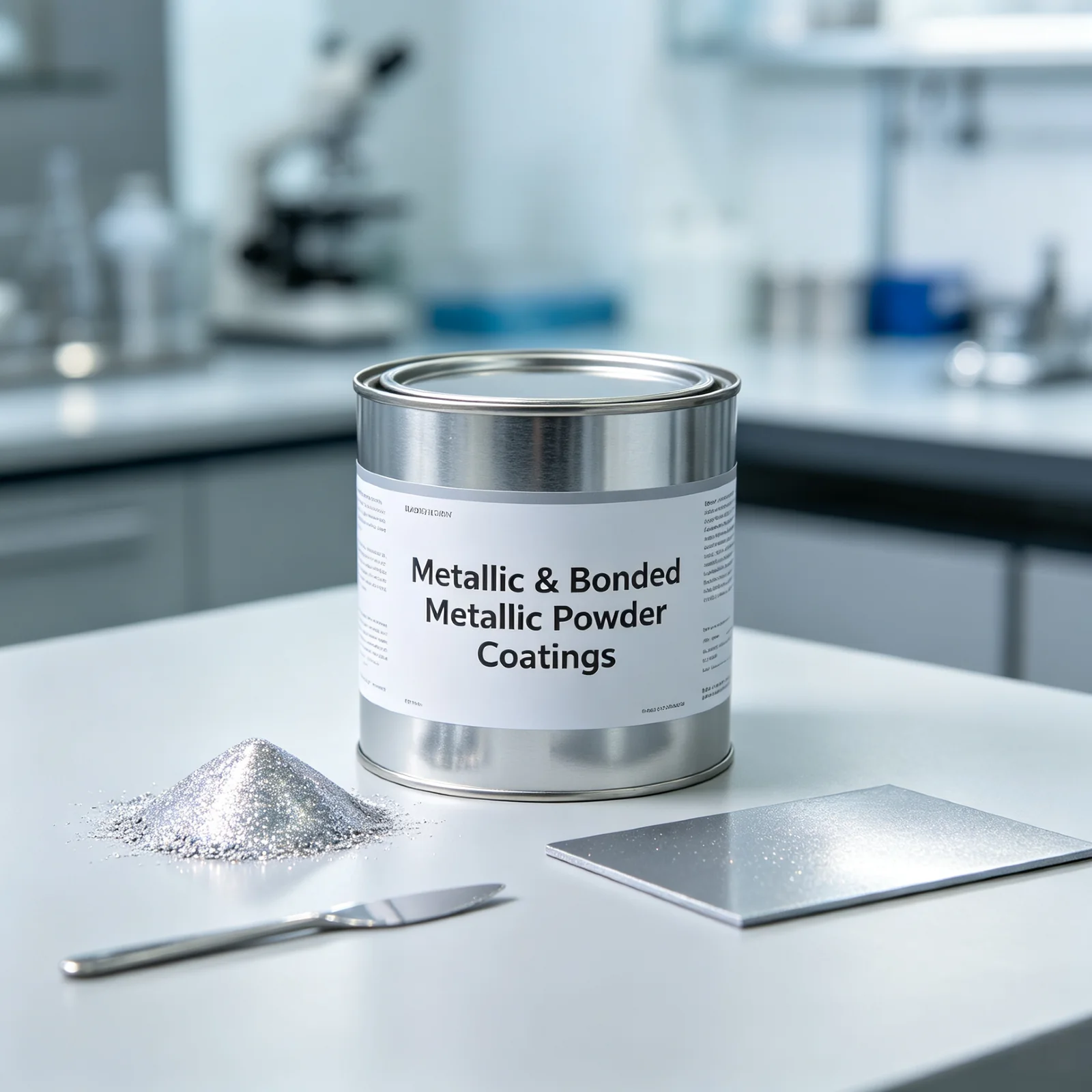
Metallic finishes sell products – they add depth, movement and a premium feel that flat colors cannot match. But a metallic coating is also the least forgiving color family to reproduce consistently. This guide explains how metallic effects are created, where the risks are, and how to specify them so your finish stays stable batch after batch.
Key Takeaways
- Sparkle comes from aluminium or pearl flakes that orient differently as the film flows and cures.
- Flake orientation is why metallics drift with film thickness, spray angle and cure.
- Dry-blend metallics can separate during spraying and reclaim, while bonded metallics keep flake and resin together.
- Coarse sparkle effects often need a clear coat to protect the finish and the feel.
How the Metallic Effect Is Created
The sparkle comes from tiny aluminum or pearl pigments suspended in the powder. When the powder melts and flows, those flakes orient at different angles and reflect light differently, which is what creates the shifting, metallic look. That same flake behavior is also the reason metallics are harder to control than solid colors.
Why Batches Drift
- Flake size and distribution change how coarse or fine the sparkle looks
- Film thickness changes flake orientation: thicker films can look darker or patchier
- Reclaim and overspray can separate flakes from the resin, shifting the color
- Cure temperature and time affect how much the flakes re-orient
Bonded vs Dry-Blend Metallics
Dry-blend metallics are simply mixed in the bag and can separate during spraying and reclaim, causing visible color drift between parts. Bonded metallics fix the flakes onto each powder particle, so color stays stable through reclaim and multiple passes – which is why bonded systems are the standard for anything that requires repeatable color.
Clear Coat Over Metallic: When It Is Needed
Some metallics, especially coarse sparkle effects, can feel rough or show fingerprints. A clear topcoat adds smoothness, protects the flakes from abrasion and can deepen the gloss. It also adds a production step and cost, so only use it where the product demands it.
What to Test Beyond Color
- Color difference (delta-E) between approved sample and production
- Gloss at the specified angle, since metallics can vary in perceived sheen
- Mechanical properties: impact, adhesion and flexibility at the right thickness
- Salt spray or weathering if the metallic part will live outdoors
Frequently Asked Questions
Why do metallic powder coatings vary between batches?
Flake size and distribution, film thickness, reclaim behaviour and cure all change how the flakes reflect light, so the same formulation can look different part to part.
What is the difference between bonded and dry-blend metallic powder?
In a bonded metallic the flakes are attached to each powder particle, so they travel and reclaim consistently. Dry-blend metallics are simply mixed in the bag and can separate, causing color drift.
When does a metallic powder need a clear coat?
When the sparkle effect is coarse enough to feel rough or to hold fingerprints. A clear topcoat protects the metallic layer and gives a smoother surface.
Need More Information?
Our engineers can help you choose the right powder coating system, color and finish for your project.